A practical guide to picking the right two-wheeler without wasting your money
Switching to electric mobility is one of the smartest moves you can make right now. The promise of silent acceleration, zero tailpipe emissions, and minimal running costs makes a premium electric two-wheeler incredibly appealing. However, stepping into the EV market isn't quite like buying a traditional petrol vehicle.
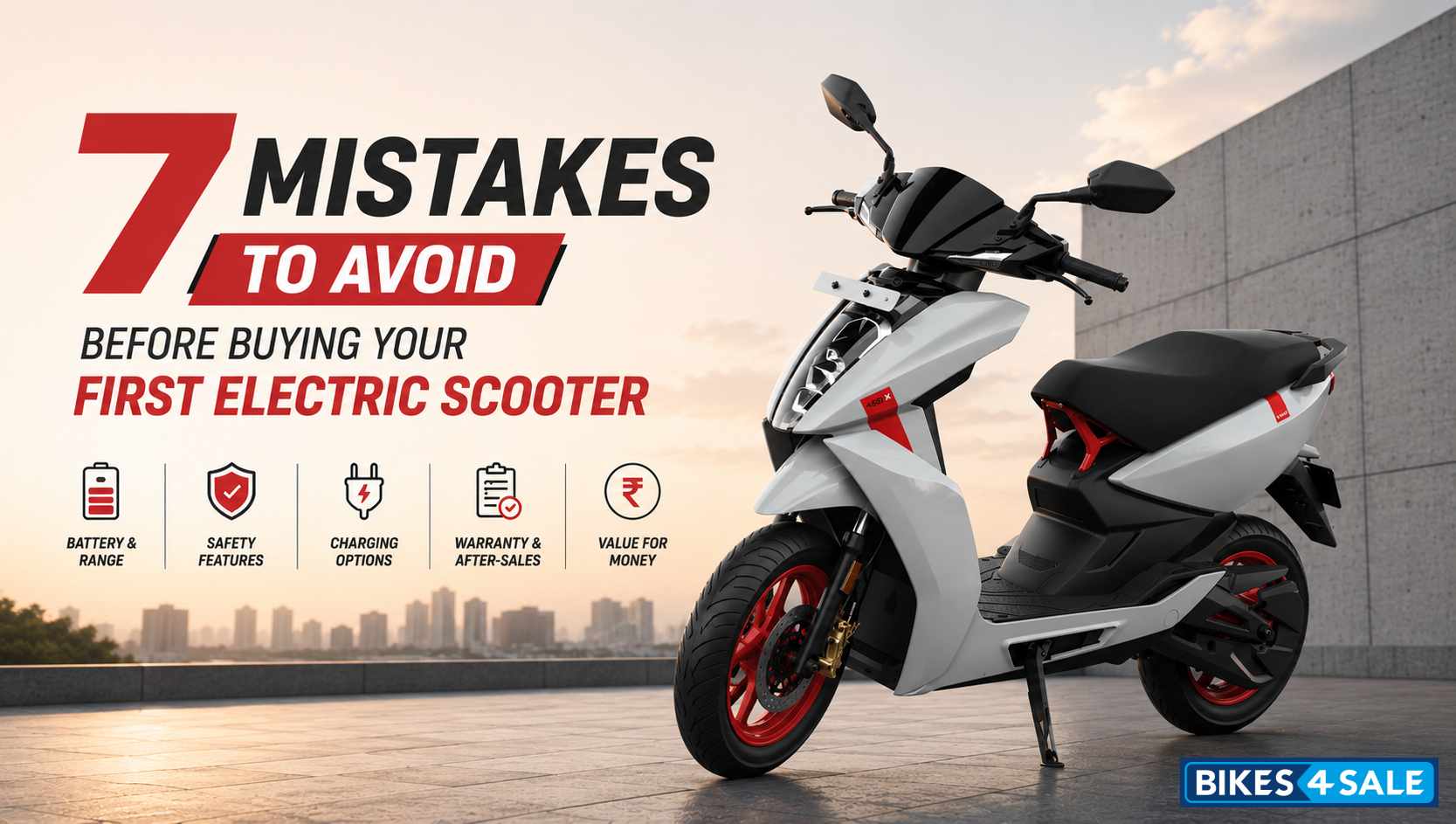
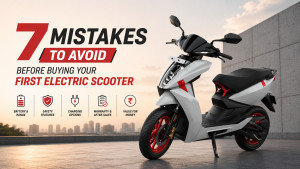
Many first-time buyers jump in without understanding the distinct technical details of battery technology and charging logistics. This often leads to immediate buyer regret. If you want to make a smart choice, make sure you keep an eye out for these seven common electric scooter buying mistakes.
The single biggest pitfall for new riders is trusting the laboratory-tested range printed on the brochure. Manufacturers highlight an ideal number achieved under perfect conditions: a lightweight rider, flat tracks, no wind, and a constant low speed.
Real-world riding involves stop-and-go city traffic, steep inclines, and pillion passengers. These factors drain the battery much faster than expected.
• The Reality Check: Assume your actual range will be roughly 20% to 30% lower than the advertised figure.
• The Smart Fix: Calculate your exact daily commute distance and look for a model that offers a real-world range buffer of at least 1.5 times that number.
Not all electric vehicle batteries are created equal. The two dominant types powering modern scooters are Lithium Iron Phosphate (LFP) and Nickel Manganese Cobalt (NMC).
Ignoring what sits beneath your floorboard is a massive error. NMC batteries offer incredible energy density and performance but are sensitive to high ambient temperatures. On the flip side, LFP batteries handle extreme heat much better and tend to offer a significantly longer overall lifespan. Always read the fine print regarding capacity retention guarantees in the warranty.
A vehicle can look stunning on a showroom floor or on your phone screen, but a digital spec sheet won't tell you how it handles a massive pothole. Skipping a comprehensive test ride means you miss out on evaluating critical ergonomic factors.
When you take a model out, don't just loop around the block. Look for broken tarmac and speed bumps. Pay close attention to how the suspension handles rough surfaces, whether the seat padding stays comfortable, and if the throttle response feels smooth or jerky during slow-speed lane filtering.
Before making a payment, you need a concrete plan for where your vehicle will plug in. Assuming you can simply figure it out later is a recipe for immense frustration.
If you live in a high-rise apartment complex, you need to check the building regulations regarding parking-space installations or check if the scooter features a removable battery pack that you can carry upstairs. For standard garages, ensure your electrical wiring can comfortably handle a continuous charging load for three to eight hours straight without overheating.
It is easy to get distracted by high-performance ride modes and extreme top speeds. While a dual-motor machine that clears highway speeds sounds exciting, it often compromises on daily utility.
For urban commuting, build quality and structural durability matter infinitely more than top-end performance. Look for a robust tubular chassis, reliable combined braking systems (CBS) or disc brakes, and an excellent ingress protection (IP) rating for the motor and battery pack to ensure the machine survives heavy monsoon downpours.
An electric vehicle has fewer moving parts than an internal combustion engine, but it still requires specialized maintenance. Buying from an unproven brand with no local presence is a massive gamble.
If a software glitch occurs or a proprietary sensor fails, you cannot simply take it to a neighborhood mechanic. Stick to established brands that have fully operational, physical service networks within your immediate area. Ask about typical turnaround times for replacement parts before signing the paperwork.
The upfront ex-showroom price is just one part of the financial equation. To understand the true value, you need to look at the total cost of ownership over a four or five-year period.
Factor in comprehensive insurance premiums, mandatory roadside assistance plans, software subscription renewals for smart features, and the long-term cost of a potential out-of-warranty battery replacement. A slightly more expensive premium scooter with a stellar battery warranty often ends up costing much less over time than a cheap import.
Buying your first electric scooter doesn't have to be a gamble. By avoiding these seven common mistakes — ignoring real battery range, underestimating motor power, skipping local laws, bypassing safety certifications, overlooking brakes, neglecting long-term costs, and skipping test rides — you position yourself to make a well-informed, value-for-money decision.
Take your time, compare models, read independent reviews, and always prioritize safety over aesthetics or price alone. The right electric scooter will save you time, money, and give you a genuinely enjoyable commuting experience for years to come.
Many first-time buyers jump in without understanding the distinct technical details of battery technology and charging logistics. This often leads to immediate buyer regret. If you want to make a smart choice, make sure you keep an eye out for these seven common electric scooter buying mistakes.
1. Relying Blindly on the Advertised Battery Range
The single biggest pitfall for new riders is trusting the laboratory-tested range printed on the brochure. Manufacturers highlight an ideal number achieved under perfect conditions: a lightweight rider, flat tracks, no wind, and a constant low speed.
Real-world riding involves stop-and-go city traffic, steep inclines, and pillion passengers. These factors drain the battery much faster than expected.
• The Reality Check: Assume your actual range will be roughly 20% to 30% lower than the advertised figure.
• The Smart Fix: Calculate your exact daily commute distance and look for a model that offers a real-world range buffer of at least 1.5 times that number.
2. Overlooking Battery Chemistry and Thermal Management
Not all electric vehicle batteries are created equal. The two dominant types powering modern scooters are Lithium Iron Phosphate (LFP) and Nickel Manganese Cobalt (NMC).
Ignoring what sits beneath your floorboard is a massive error. NMC batteries offer incredible energy density and performance but are sensitive to high ambient temperatures. On the flip side, LFP batteries handle extreme heat much better and tend to offer a significantly longer overall lifespan. Always read the fine print regarding capacity retention guarantees in the warranty.
3. Skipping a Realistic Test Ride
A vehicle can look stunning on a showroom floor or on your phone screen, but a digital spec sheet won't tell you how it handles a massive pothole. Skipping a comprehensive test ride means you miss out on evaluating critical ergonomic factors.
When you take a model out, don't just loop around the block. Look for broken tarmac and speed bumps. Pay close attention to how the suspension handles rough surfaces, whether the seat padding stays comfortable, and if the throttle response feels smooth or jerky during slow-speed lane filtering.
4. Misjudging Your Home Charging Setup
Before making a payment, you need a concrete plan for where your vehicle will plug in. Assuming you can simply figure it out later is a recipe for immense frustration.
If you live in a high-rise apartment complex, you need to check the building regulations regarding parking-space installations or check if the scooter features a removable battery pack that you can carry upstairs. For standard garages, ensure your electrical wiring can comfortably handle a continuous charging load for three to eight hours straight without overheating.
5. Chasing Maximum Top Speed Over Practical Build Quality
It is easy to get distracted by high-performance ride modes and extreme top speeds. While a dual-motor machine that clears highway speeds sounds exciting, it often compromises on daily utility.
For urban commuting, build quality and structural durability matter infinitely more than top-end performance. Look for a robust tubular chassis, reliable combined braking systems (CBS) or disc brakes, and an excellent ingress protection (IP) rating for the motor and battery pack to ensure the machine survives heavy monsoon downpours.
| Feature / Metric | What the Brochure Focuses On | What Matters in Daily Life |
|---|---|---|
| Range | Certified Ideal Range (IDC) | Real-world range with traffic & hills |
| Performance | Maximum Top Speed | Smooth low-speed throttle control |
| Utility | App connectivity & smart screens | Under-seat storage space & build quality |
| Safety | Digital anti-theft tracking | High-quality disc brakes & IP67 waterproofing |
6. Ignoring Local Service Support and Parts Availability
An electric vehicle has fewer moving parts than an internal combustion engine, but it still requires specialized maintenance. Buying from an unproven brand with no local presence is a massive gamble.
If a software glitch occurs or a proprietary sensor fails, you cannot simply take it to a neighborhood mechanic. Stick to established brands that have fully operational, physical service networks within your immediate area. Ask about typical turnaround times for replacement parts before signing the paperwork.
7. Forgetting the Total Cost of Ownership
The upfront ex-showroom price is just one part of the financial equation. To understand the true value, you need to look at the total cost of ownership over a four or five-year period.
Factor in comprehensive insurance premiums, mandatory roadside assistance plans, software subscription renewals for smart features, and the long-term cost of a potential out-of-warranty battery replacement. A slightly more expensive premium scooter with a stellar battery warranty often ends up costing much less over time than a cheap import.
Final Thoughts Before You Buy
Buying your first electric scooter doesn't have to be a gamble. By avoiding these seven common mistakes — ignoring real battery range, underestimating motor power, skipping local laws, bypassing safety certifications, overlooking brakes, neglecting long-term costs, and skipping test rides — you position yourself to make a well-informed, value-for-money decision.
Take your time, compare models, read independent reviews, and always prioritize safety over aesthetics or price alone. The right electric scooter will save you time, money, and give you a genuinely enjoyable commuting experience for years to come.
 Bikes4Sale Crosses 10 Lakh Bike Listings
 Yamaha FZ-S FI vs FZ-S FI Hybrid (2026): Which One Should You Buy?
 7 Mistakes to Avoid Before Buying Your First Electric Scooter