

Bikes4Sale Price Guide : Used Bike Valuation Tool
Know the market value of your used bike
KMs Run
| Selected Bikes | 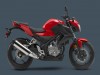 Honda CB300F
Brand: Model: |
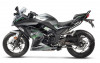 Kawasaki Ninja 300 BS6 2023
Brand: Model: |
Brand: Model: |
Brand: Model: |
| Fuel | Petrol | Petrol | ||
| Engine Displacement | 286.00 cc | 296.00 cc | ||
| Engine | Liquid-cooled single-cylinder four-stroke | Liquid-cooled, 4-stroke Parallel Twin, DOHC, 8 valves | ||
| Engine Starting | -- | Electric | ||
| Engine Lubrication | -- | Forced lubrication wet sump | ||
| Clutch | -- | Assist & Slipper Clutch | ||
| Fuel System | Fuel Injection | Fuel Injection: ø32 mm x 2, with dual throttle valves | ||
| Ignition | Computer-controlled digital transistorized with electronic advance | Digital | ||
| Maximum Power | -- | 39 PS @ 11000 rpm | ||
| Maximum Torque | -- | 26.1 Nm @ 10000 rpm | ||
| Transmission | Six-speed | 6-speed, return | ||
| Top Speed | -- | 180 kmph | ||
| Display | -- | Dual-Dial instrumentation with multi-function LCD | ||
| Frame | -- | Tube diamond, steel | ||
| Headlamp | -- | LED | ||
| Taillamp | -- | LED |
| Standard Test Conditions | 30 kmpl | -- | ||
| Overall Mileage | -- | 25-30 kmpl |
| Front | 110/70-17 radial | 110/70 - 17 M/C 54H | ||
| Rear | 140/70-17 radial | 140/70 - 17 M/C 66H | ||
| Wheel / RIM | -- | Alloy |
| Front | Single 296mm disc | Single 290 mm petal disc Caliper - Dual-piston |
||
| Rear | Single 220mm disc | Single 220 mm petal disc Caliper - Dual-piston |
||
| ABS | -- | Dual Channel ABS. |
| Front | 37mm fork; 4.65 inches travel | 37 mm Telescopic Fork / 120 mm travel | ||
| Rear | Pro-Link single shock with five positions of spring preload adjustability; 4.07 inches travel | Bottom-Link Uni-Trak with gas-charged shock and 5-way adjustable pre-load / 132 mm travel |
| Colors | Red | Lime Green Candy Lime Green Metallic Moondust Gray |
| Length | -- | 2015 mm | ||
| Width | -- | 715 mm | ||
| Height | 780 mm | 1110 mm | ||
| Weight | 158 kg | -- | ||
| Kerb Weight | -- | 179 | ||
| Seat Height | -- | 780 | ||
| Wheelbase | 1379 mm | 1405 mm | ||
| Ground Clearance | -- | 140 mm | ||
| Fuel Tank Capacity | 12.8 litres | 17 litres |
| About | The Honda CB300F is a compact and nimble motorcycle powered by a 286cc liquid-cooled sin Read More | -- | ||
| Features | Narrow Seat and Low Seat Height. Under-seat Storage. Separate passenger seat, integrated grab rail and standard passenger footpegs. Pro-Link Rear Suspension. Counterbalance Shaft. Clean, Open Design. Multifunction Digital Instrumentation. |
- Heat Management Technology - Wide set of raised separate handle bar - Supersports style aluminium footpegs - Race inspired windshield. |
||
| Additional Details | -- | Fuel type / Minimum octane rating : Unleaded petrol/RON91 Rake / Trail : 27° / 93 mm 2-1 exhaust with short-style silencer |
| Pros | -- | - Robust 296cc engine offering impressive performance. - Sporty and sleek design with a race-inspired windshield. - Assist & Slipper Clutch ensuring smooth gear shifts. - Heat Management Technology for better engine performance. - Excellent braking system with Dual Channel ABS. - High-quality LED headlamp and tail lamp for superior visibility. - Comfortable ergonomics with raised handlebars and aluminium footpegs. - Comprehensive dual-dial instrument panel with multi-function LCD. |
||
| Cons | -- | - High price point could be a barrier for some buyers. - Lack of quick-shifter may disappoint performance enthusiasts. - Higher seat height may not be comfortable for shorter riders. - Kerb weight of 179 kg might be cumbersome for city commutes. - Limited colour options could deter those looking for more variety. - Absence of smartphone connectivity features found in competitors. - Fuel economy could be better for its segment. - Ground clearance of 140 mm might pose problems on uneven terrains. |
Get the best price for your old bike. Sell your bike at the Largest Used Bike Market.

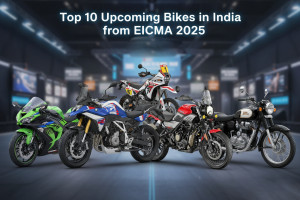 Top 10 Upcoming Bikes in India from EICMA 2025
 Bajaj Chetak Tops India’s EV Scooter Sales
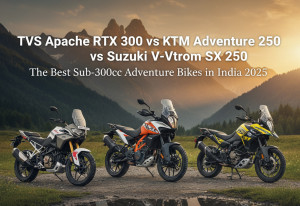 TVS Apache RTX 300 vs KTM Adventure 250 vs Suzuki V-Strom SX 250: The Best Sub-300cc Adventure Bikes in India 2025