Exploring the GST Cut, Smart Engineering, and How the Hunter 350 Outprices Its Royal Enfield Siblings and Rivals
The Royal Enfield Hunter 350 was designed with a single goal: to be a more accessible entry point to the brand. It’s a nimble and lightweight machine created for a younger generation of riders. This strategic intent, combined with a recent GST tax cut in India, has cemented its position as the most economical 350cc motorcycle available today.
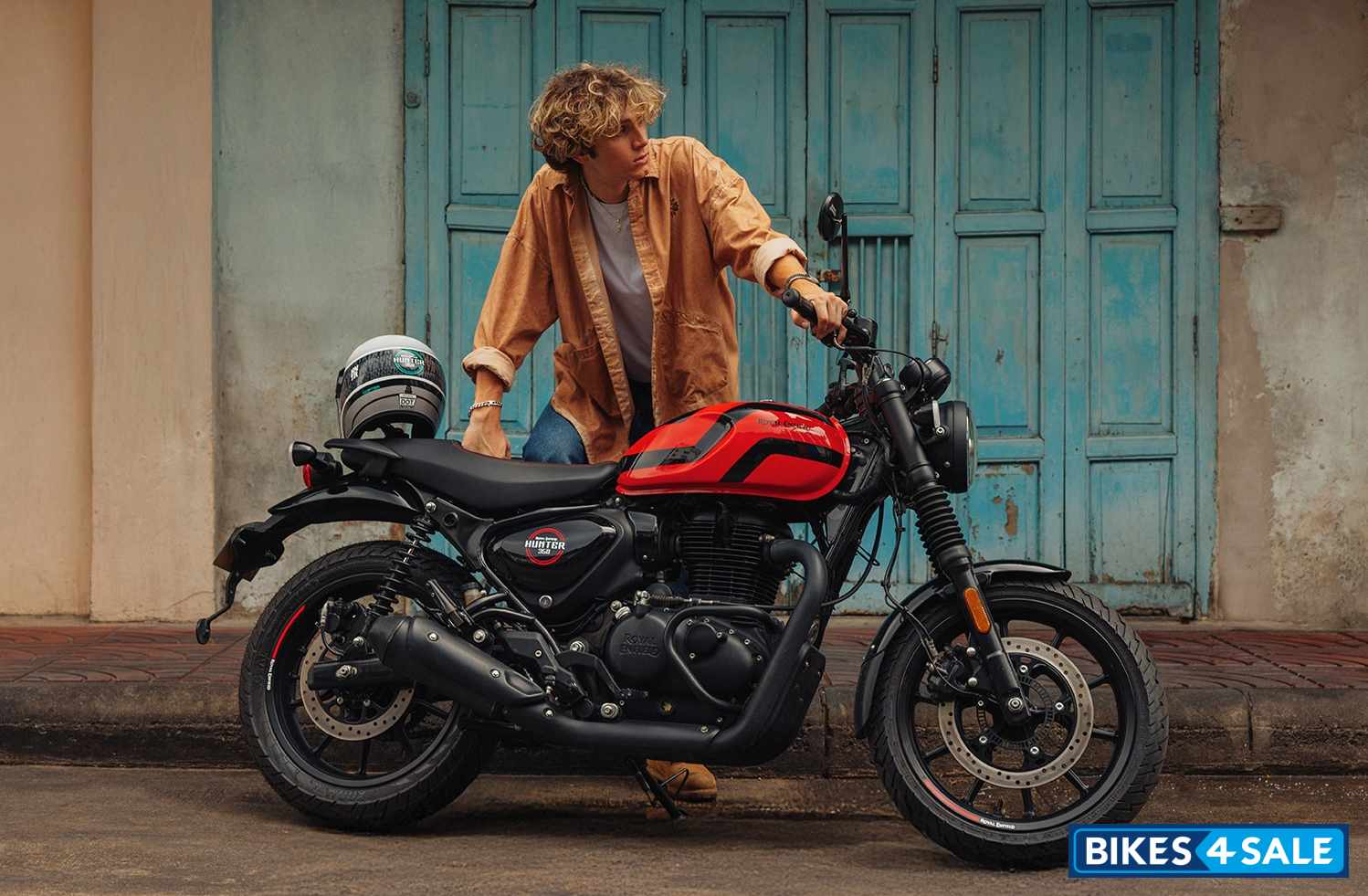
The Hunter 350's low price is a direct result of deliberate design choices focused on simplicity and efficiency.
• Shared Heart, Different Body: The bike is powered by the same reliable J-series 349cc engine found in the Classic 350 and Meteor 350. By using a common engine platform across multiple models, Royal Enfield achieves significant cost savings in manufacturing and development.
• A Lighter, Leaner Chassis: The Hunter uses an all-new twin-downtube spine frame developed by Harris Performance, which is different from its siblings. This frame, along with other design choices, makes the Hunter the lightest Royal Enfield at just 181kg, a full 17kg lighter than the Classic 350.
• Cost-Effective Components: The Hunter is the only Royal Enfield to feature 17-inch wheels on both the front and rear, which are less expensive to produce and source than the larger wheels on other models. The company also offers different variants with tiered features to manage costs:
o The base 'Retro' variant uses simpler wire-spoke wheels, a rear drum brake, and single-channel ABS.
o The more expensive 'Metro' variant comes with alloy wheels, a rear disc brake, and dual-channel ABS.
A major reason for the Hunter 350's current price point is the 2025 GST tax reform in India. The government reduced the Goods and Services Tax on motorcycles under 350cc from 28% to 18%, and Royal Enfield announced it would pass the full benefit of up to Rs 22,000 on to its customers. This has made the entire 350cc lineup significantly cheaper, but the Hunter's inherently lower manufacturing cost means its price gap remains substantial.
Here's how the prices compare after the GST cut:
All prices are ex-showroom, India, as of 2025.
As the table shows, the Hunter’s base model is still nearly ₹44,000 cheaper than the base Classic 350 and about ₹25,000 less than the base Bullet 350.
The Hunter 350 doesn’t just compete with its siblings; it takes on rivals in a new market segment.
• Vs. Royal Enfield Family: Compared to the heavier, more traditional Classic 350, the Hunter’s lighter chassis (181kg vs. 195kg) and shorter wheelbase (1370mm vs. 1390mm) make it a much more agile and city-friendly bike.
• Vs. External Rivals: The Hunter's most direct competitor is the TVS Ronin, which is priced even lower but has a smaller 225.9cc engine. While the Ronin offers more modern features like a fully digital console and USD forks, the Hunter provides a larger displacement and the distinct Royal Enfield brand character. Higher-end competitors like the Honda CB350RS and Triumph Speed T4 offer more power but come at a significantly higher price point, highlighting the Hunter's value proposition.
This comparative view highlights the unique trade-offs a buyer must consider. While the Hunter may lack some modern bells and whistles, it offers a larger displacement and a distinctive brand character at a price that is nearly unmatched in its class.
The Hunter 350 is a great choice for many, but it does have trade-offs.
The Good:
• Exceptional Handling: Its lightweight frame and compact design make it nimble and confidence-inspiring for new riders and city commutes.
• Accessible Ride: A low seat height of 790mm and low center of gravity make it easy to manage for a wide range of riders.
• Refined Engine: The J-series engine is smooth and predictable, perfect for urban environments and light touring.
The Not-So-Good:
• Stiff Suspension: Some riders have noted that the rear suspension can feel harsh over bumps and potholes at lower speeds.
• Heavier Clutch: The clutch action is described as being on the heavier side, which can be a drawback for new riders.
• Ergonomic Compromises: Taller riders may find the bike’s compact dimensions and proportions to be a bit cramped. The base model also lacks some modern features found on rivals.
In the end, the Hunter 350's affordability is not a compromise on quality but a strategic engineering triumph. It's a calculated effort by Royal Enfield to make its brand more accessible, and it has successfully appealed to a new generation of riders by offering a stylish, fun, and capable bike at an unbeatable price.
The Hunter's Secret: Strategic Engineering and Simplicity
The Hunter 350's low price is a direct result of deliberate design choices focused on simplicity and efficiency.
• Shared Heart, Different Body: The bike is powered by the same reliable J-series 349cc engine found in the Classic 350 and Meteor 350. By using a common engine platform across multiple models, Royal Enfield achieves significant cost savings in manufacturing and development.
• A Lighter, Leaner Chassis: The Hunter uses an all-new twin-downtube spine frame developed by Harris Performance, which is different from its siblings. This frame, along with other design choices, makes the Hunter the lightest Royal Enfield at just 181kg, a full 17kg lighter than the Classic 350.
• Cost-Effective Components: The Hunter is the only Royal Enfield to feature 17-inch wheels on both the front and rear, which are less expensive to produce and source than the larger wheels on other models. The company also offers different variants with tiered features to manage costs:
o The base 'Retro' variant uses simpler wire-spoke wheels, a rear drum brake, and single-channel ABS.
o The more expensive 'Metro' variant comes with alloy wheels, a rear disc brake, and dual-channel ABS.
The 2025 GST Cut: A Price Advantage Amplified
A major reason for the Hunter 350's current price point is the 2025 GST tax reform in India. The government reduced the Goods and Services Tax on motorcycles under 350cc from 28% to 18%, and Royal Enfield announced it would pass the full benefit of up to Rs 22,000 on to its customers. This has made the entire 350cc lineup significantly cheaper, but the Hunter's inherently lower manufacturing cost means its price gap remains substantial.
Here's how the prices compare after the GST cut:
| Sl. no | Model | Variant | Ex-Showroom Price (Post-GST) |
|---|---|---|---|
| 1 | Hunter 350 | Base | ₹1,37,640 |
| Top | ₹1,66,883 | ||
| 2 | Bullet 350 | Base | ₹1,62,161 |
| Top | ₹2,02,409 | ||
| 3 | Classic 350 | Base | ₹1,81,118 |
| Top | ₹2,15,750 | ||
| 4 | Meteor 350 | Base | ₹1,91,233 |
| Top | ₹2,15,883 |
All prices are ex-showroom, India, as of 2025.
As the table shows, the Hunter’s base model is still nearly ₹44,000 cheaper than the base Classic 350 and about ₹25,000 less than the base Bullet 350.
The Hunter 350 vs. The Competition
The Hunter 350 doesn’t just compete with its siblings; it takes on rivals in a new market segment.
• Vs. Royal Enfield Family: Compared to the heavier, more traditional Classic 350, the Hunter’s lighter chassis (181kg vs. 195kg) and shorter wheelbase (1370mm vs. 1390mm) make it a much more agile and city-friendly bike.
• Vs. External Rivals: The Hunter's most direct competitor is the TVS Ronin, which is priced even lower but has a smaller 225.9cc engine. While the Ronin offers more modern features like a fully digital console and USD forks, the Hunter provides a larger displacement and the distinct Royal Enfield brand character. Higher-end competitors like the Honda CB350RS and Triumph Speed T4 offer more power but come at a significantly higher price point, highlighting the Hunter's value proposition.
| Sl. no | Model | Engine Displacement | Max Power | Max Torque | Starting Price (Ex-Showroom 2025) | Key Differentiating Feature |
|---|---|---|---|---|---|---|
| 1 | Royal Enfield Hunter 350 | 349.34cc | 20.2 bhp | 27 Nm | ₹1,37,640 | Most affordable 350cc bike from a major manufacturer |
| 2 | TVS Ronin | 225.9cc | 20.1 bhp | 19.93 Nm | ₹1,35,000 | All-LED lights, fully digital cluster, USD forks |
| 3 | Honda CB350RS | 348cc | 20.7 bhp | 30 Nm | ₹2,16,000 | Higher-priced, more refined, sportier variant |
| 4 | Triumph Speed T4 | 399cc | 30.6 bhp | 36 Nm | ₹1,99,000 | Significantly higher performance and premium build |
This comparative view highlights the unique trade-offs a buyer must consider. While the Hunter may lack some modern bells and whistles, it offers a larger displacement and a distinctive brand character at a price that is nearly unmatched in its class.
What Makes It Stand Out (and What Doesn't)
The Hunter 350 is a great choice for many, but it does have trade-offs.
The Good:
• Exceptional Handling: Its lightweight frame and compact design make it nimble and confidence-inspiring for new riders and city commutes.
• Accessible Ride: A low seat height of 790mm and low center of gravity make it easy to manage for a wide range of riders.
• Refined Engine: The J-series engine is smooth and predictable, perfect for urban environments and light touring.
The Not-So-Good:
• Stiff Suspension: Some riders have noted that the rear suspension can feel harsh over bumps and potholes at lower speeds.
• Heavier Clutch: The clutch action is described as being on the heavier side, which can be a drawback for new riders.
• Ergonomic Compromises: Taller riders may find the bike’s compact dimensions and proportions to be a bit cramped. The base model also lacks some modern features found on rivals.
In the end, the Hunter 350's affordability is not a compromise on quality but a strategic engineering triumph. It's a calculated effort by Royal Enfield to make its brand more accessible, and it has successfully appealed to a new generation of riders by offering a stylish, fun, and capable bike at an unbeatable price.